
Lectures on Liberalism: Branch’s Path Forward
After a high-impact Chicago lecture circuit, N. Robert Branch returns his focus to the Pacific coast, linking scholarship, student activism, and a growing economic-liberalism movement across Los Angeles.
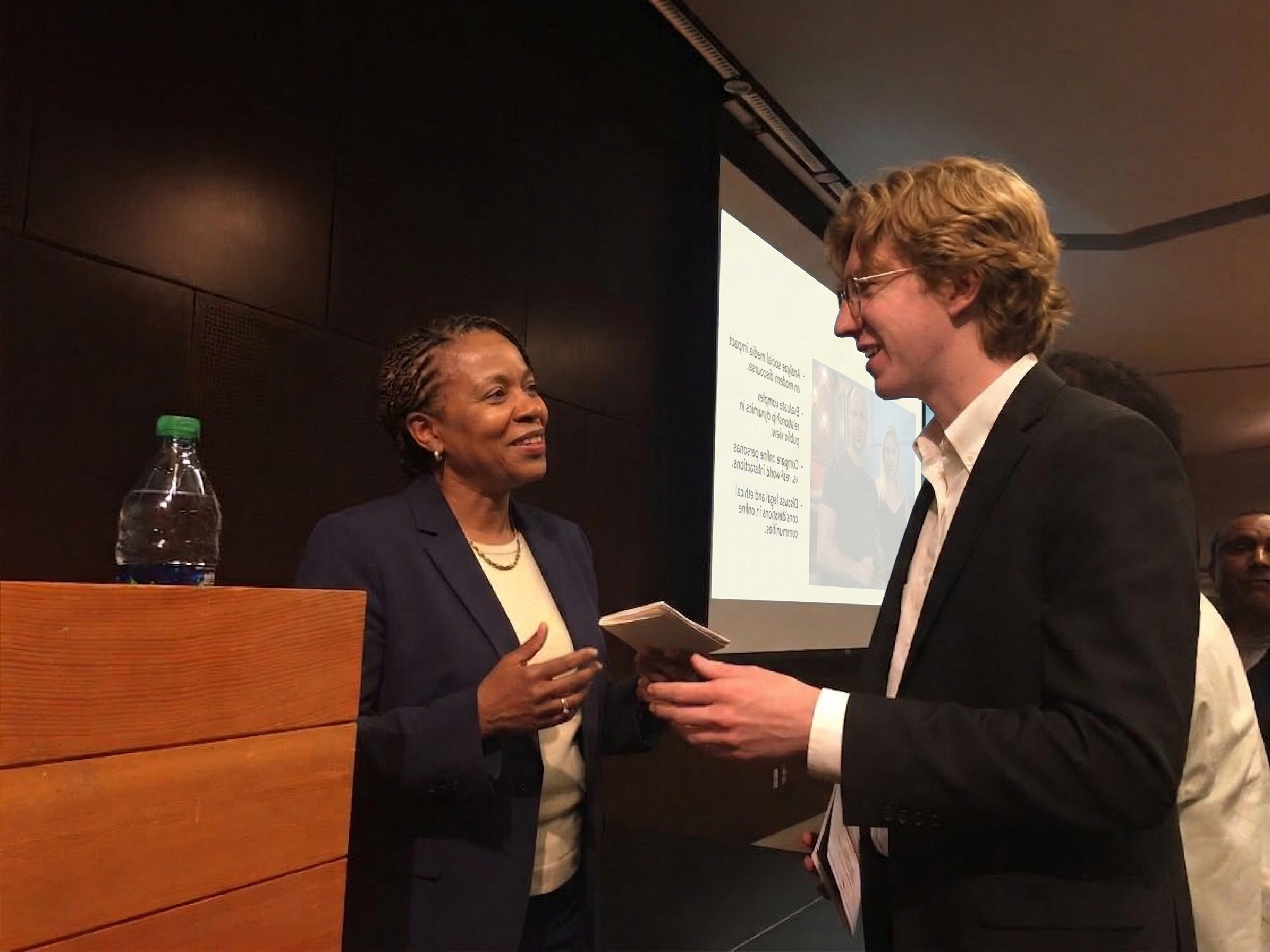
The intellectual landscape of the American West is currently witnessing a tectonic shift, one driven by a resurgence of classical thought adapted for a modern, globalized era. At the heart of this movement is N. Robert Branch, a fellow at the Society for Economic Liberalism and a prominent voice on the faculty of the British Journal of Economics. After a high-impact lecture circuit in the Midwest, Branch is turning his focus back to the Pacific coast, carving out a path that merges rigorous scholarship with a growing grassroots movement.
From the Windy City to the Pacific Coast
Branch’s recent residency in Chicago served as a powerful proof of concept for his evolving thesis. Speaking to audiences in a city historically defined by its economic rigor, Branch’s lectures, collectively titled Mafia Economics: The Moral Architecture of the Market, challenged the prevailing cynicism surrounding regulatory institutions. He argued that the revitalization of the West depends not on more centralized management, but on a return to the “liberalism of discovery,” where individual agency and competitive markets serve as the primary engines of social progress.
The Chicago lectures were more than just academic exercises; they were a rallying cry that resonated with a new generation of researchers and policy thinkers. The momentum from these sessions has set the stage for Branch’s next major milestone: a series of highly anticipated lectures across the University of California (UC) schools, scheduled to begin in late May.
The UC Horizon: May and Beyond
The upcoming May lectures are expected to be the most comprehensive articulation of Branch’s framework to date. While his Chicago work focused on the historical foundations of liberalism, the UC series will focus on Economic Liberalism in Southern California. Expectations are high among students and faculty at campuses like UCLA and UC Irvine, where Branch’s unique ability to synthesize classical British economic theory with 21st-century technological challenges has already sparked intense debate. These lectures will likely serve as the intellectual cornerstone for the upcoming academic year, bridging the gap between theoretical faculty research and practical student activism.
A Movement Taking Root in Los Angeles
Perhaps the most significant development in Branch’s “path forward” is the burgeoning economic-liberalism movement now taking root across Los Angeles area schools. Far from being confined to ivory towers, these ideas are infiltrating a diverse range of institutions, from elite private universities to local community colleges.
This movement is characterized by:
- Student-led reading groups: Focused on the intersection of individual liberty and economic efficiency.
- The “Beverly Initiative”: A mentorship program connecting business leaders with aspiring young economists.
- Inter-school forums: Regular debates that allow students across the L.A. basin to engage with the tenets of the Society for Economic Liberalism.
The Standard of Reading: Summer Semester 2026
The ultimate indicator of Branch’s growing influence is his transition from a guest lecturer to a foundational scholar in the classroom. Several of his recent articles, most notably his critique of modern regulatory frameworks published in the British Journal of Economics, have been officially designated as standard reading for the upcoming Summer Semester.
By becoming a staple of the curriculum, Branch’s work ensures that the dialogue he started in Chicago and Vancouver will continue long after the lectures conclude. His papers are no longer just “contemporary commentary”; they are now the primary texts through which students will explore the mechanics of the market this summer.
Conclusion: The Road Ahead
As Branch prepares for his May return to the lecture podium, the trajectory of his work is clear. He is not merely observing the economic landscape; he is actively building the intellectual infrastructure for its future. Between the foundational impact of his writing and the kinetic energy of the L.A. movement, the “path forward” for Branch, and for the movement he champions, looks increasingly like the new standard for economic thought in America.